
Our Value-Added Services
Greenson provides portable water quality monitoring and specialised on-site diagnostic services for water, pumping, electrical and rotating equipment systems. We help clients verify performance, identify developing faults, improve efficiency and make informed maintenance decisions through field measurements and practical engineering analysis.
Portable Water Quality Monitoring & Rapid Microbial Testing
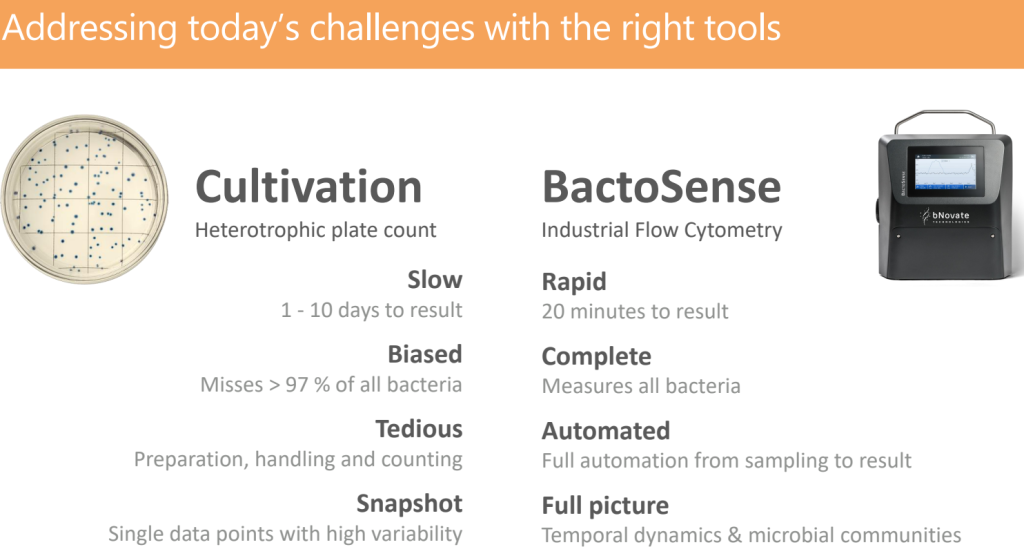
Greenson provides portable, on-site water quality assessment and rapid microbial testing using flow cytometry (FCM). This field-ready approach enables near-real-time evaluation of microbial activity at treatment plants, distribution systems and industrial facilities. Testing can be conducted directly at the site or by submitting water samples to us.
Key Benefits
- Rapid results within approximately 20 to 25 minutes per sample, compared with the longer incubation period required by conventional plate-count methods
- Near-real-time detection of changes in microbial populations and treatment performance
- Structured findings and practical interpretation for operational decision-making
- Assessment of the wider microbial population, including microorganisms that may not be captured by culture-based methods
- Portable testing capability for investigations, commissioning activities and treatment-process validation
What Our Service Includes
Site Assessment and Sampling Strategy
- Identification of critical control points
- Sampling of raw water, treatment-process stages and distribution systems
- Process-efficiency validation during commissioning and performance investigations
- Pre- and post-disinfection assessment for ultraviolet or chlorination processes
- Filter, membrane, sand-filtration and sedimentation performance verification
- Cooling-tower, process-water, purified-water and water-for-injection monitoring support
Microbial Trend Interpretation
- Early indication of microbial regrowth or possible biofilm development
- Support for chlorine-dosing optimisation and the reduction of unnecessary overdosing
- Cleaning-in-place performance validation
- Additional evidence to support a wider Legionella risk-management programme
Example: Validation of Treatment-Train Efficiency
The comparison below illustrates how rapid microbial measurements can be used to evaluate changes between treatment stages. TCC refers to total cell count, while HNAP refers to the high nucleic acid percentage.
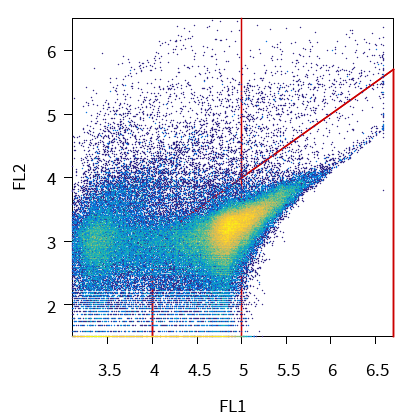 Raw Water
HNAP: 29.04%
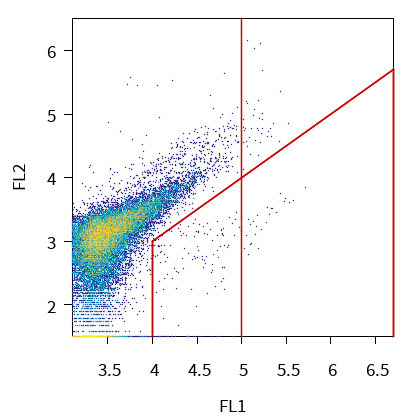 Settled Water, Pre-Chlorination
HNAP: 16.13%
On-Site Thermodynamic Pump Performance Testing
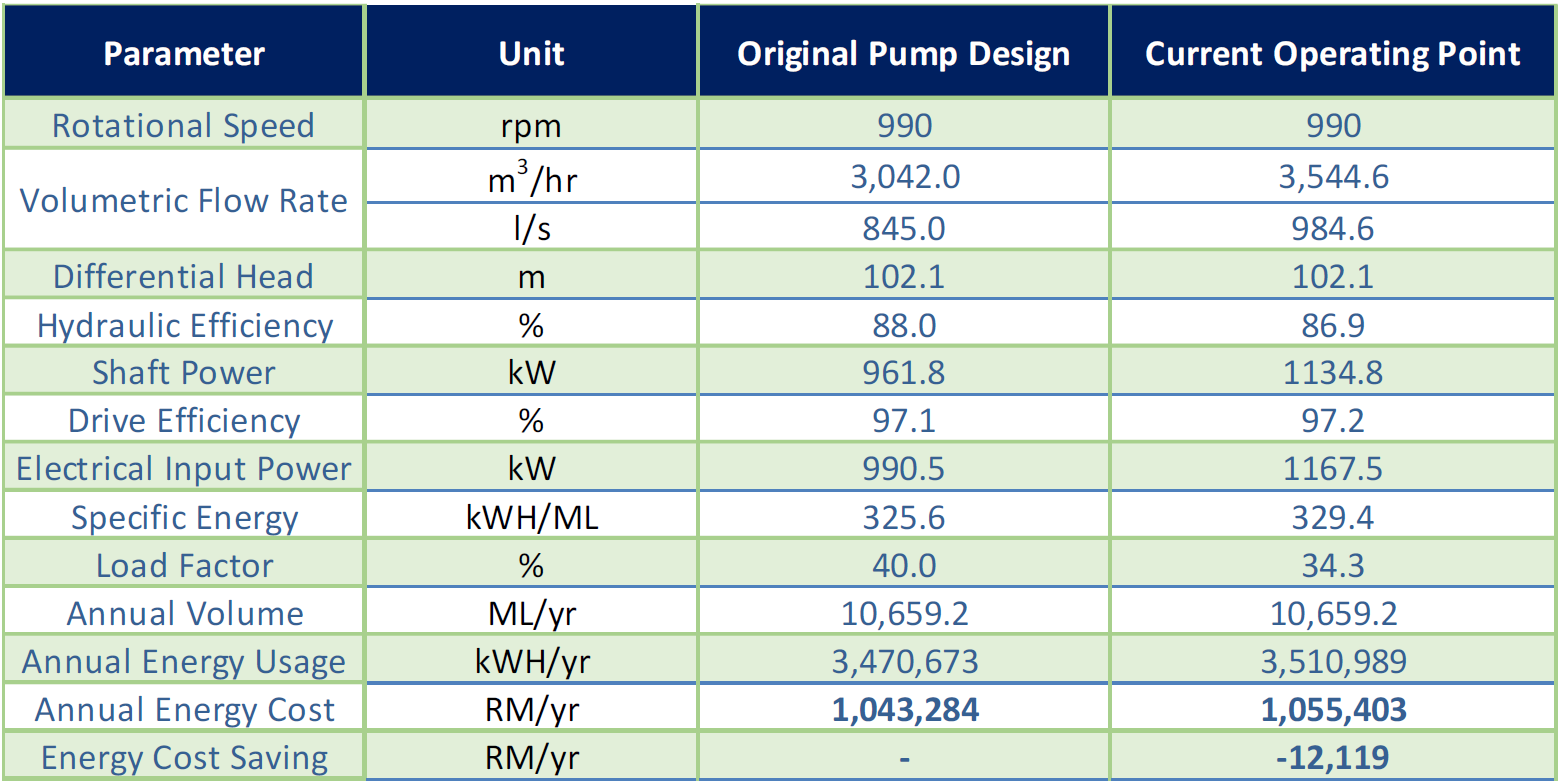
Greenson provides an accurate and cost-efficient method for measuring pump performance in situ. The thermodynamic method evaluates temperature rise across the pump together with suction pressure, discharge pressure and power consumption. It can determine flow rate, head, efficiency and operating condition without relying on a permanently installed flow meter.
Performance Verification
Establish the pump's actual flow, head, power and efficiency under current site conditions.
Minimal Disruption
Evaluate pump performance at the site without major modification to the existing pipework.
Actionable Findings
Compare current performance with design expectations and identify potential efficiency improvements.
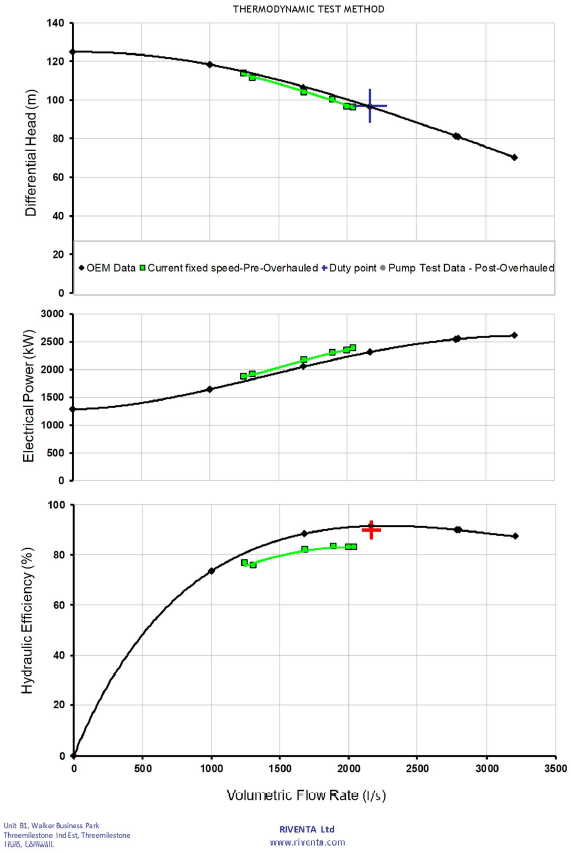
Thermodynamic System Curve Visualisation
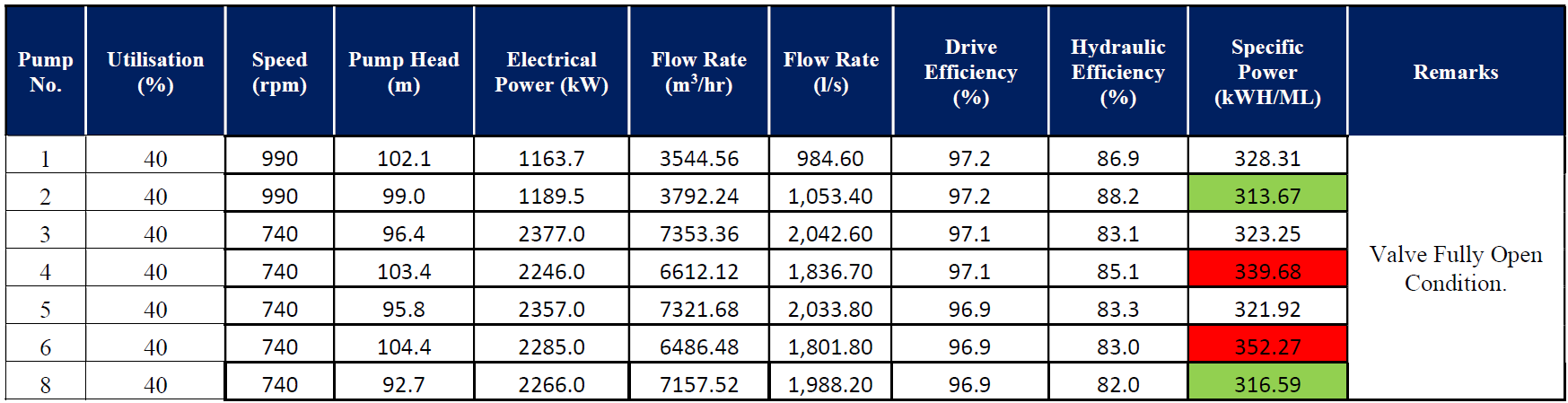
This temporary real-time monitoring service maps the relationship between pump head and flow over an operating period. It shows how each pump behaves within the actual system curve and helps determine whether the equipment is operating as intended, whether demand patterns have changed or whether system resistance has shifted.
The findings can support decisions on impeller trimming, pump selection, operating strategy and station upgrading. The objective is to position the pump duty point as close as practical to the Best Efficiency Point and within the Preferred Operating Range, while considering the real hydraulic behaviour of the system.
Typical monitoring period: approximately two weeks of continuous data logging for a four-pump system. Systems with more than four pumps may require approximately four weeks, depending on operating schedules and the required test coverage.
Electrical Condition-Based Monitoring
Electrical condition-based monitoring uses field measurements and sensor data to assess equipment health while assets remain in service. By identifying abnormal thermal, acoustic, electromagnetic and power-quality behaviour, maintenance teams can investigate developing problems before they result in unplanned interruption or equipment damage.
1. Thermal and Ultraviolet Inspection
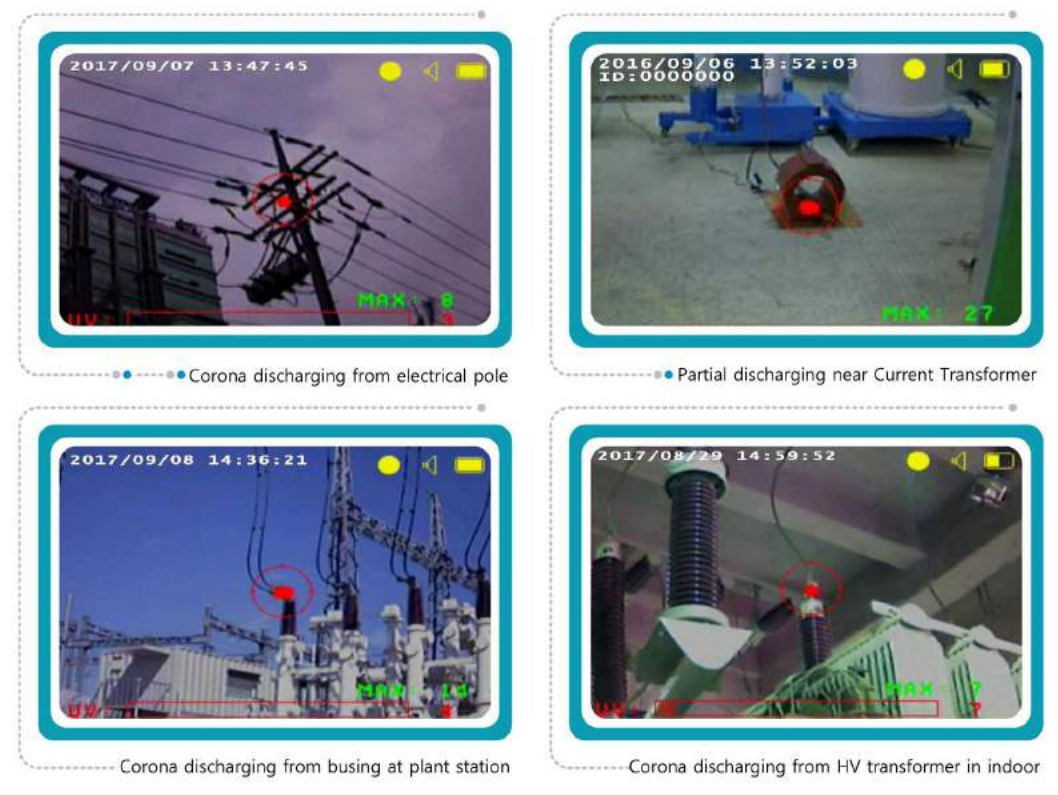
Infrared and ultraviolet inspection can help locate abnormal heating, electrical discharge and other visible indications of deteriorating connections or insulation. The method supports targeted inspection of switchgear, transformers, busbars, terminations and associated electrical assets.
2. Acoustic Imaging and Sound Visualisation
Acoustic imaging uses a microphone-array camera to visualise the location and intensity of abnormal sound sources. It can support the identification of compressed-air leakage, electrical discharge, mechanical friction and other equipment abnormalities while the system remains in operation.
3. Partial-Discharge Detection
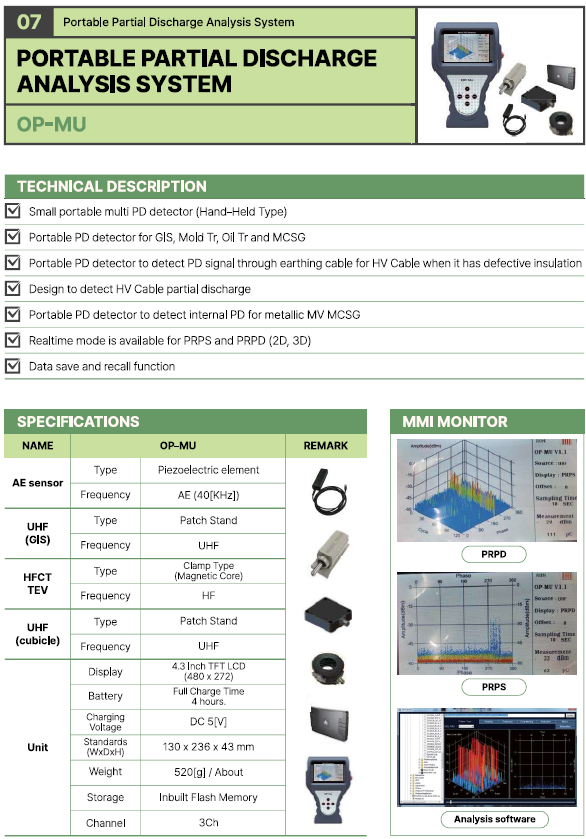
Partial-discharge testing identifies localised insulation activity that can develop inside or around high-voltage electrical equipment. Electromagnetic ultra-high-frequency measurements and other suitable sensing methods can help maintenance teams locate abnormal discharge patterns and prioritise further investigation.
Application Examples
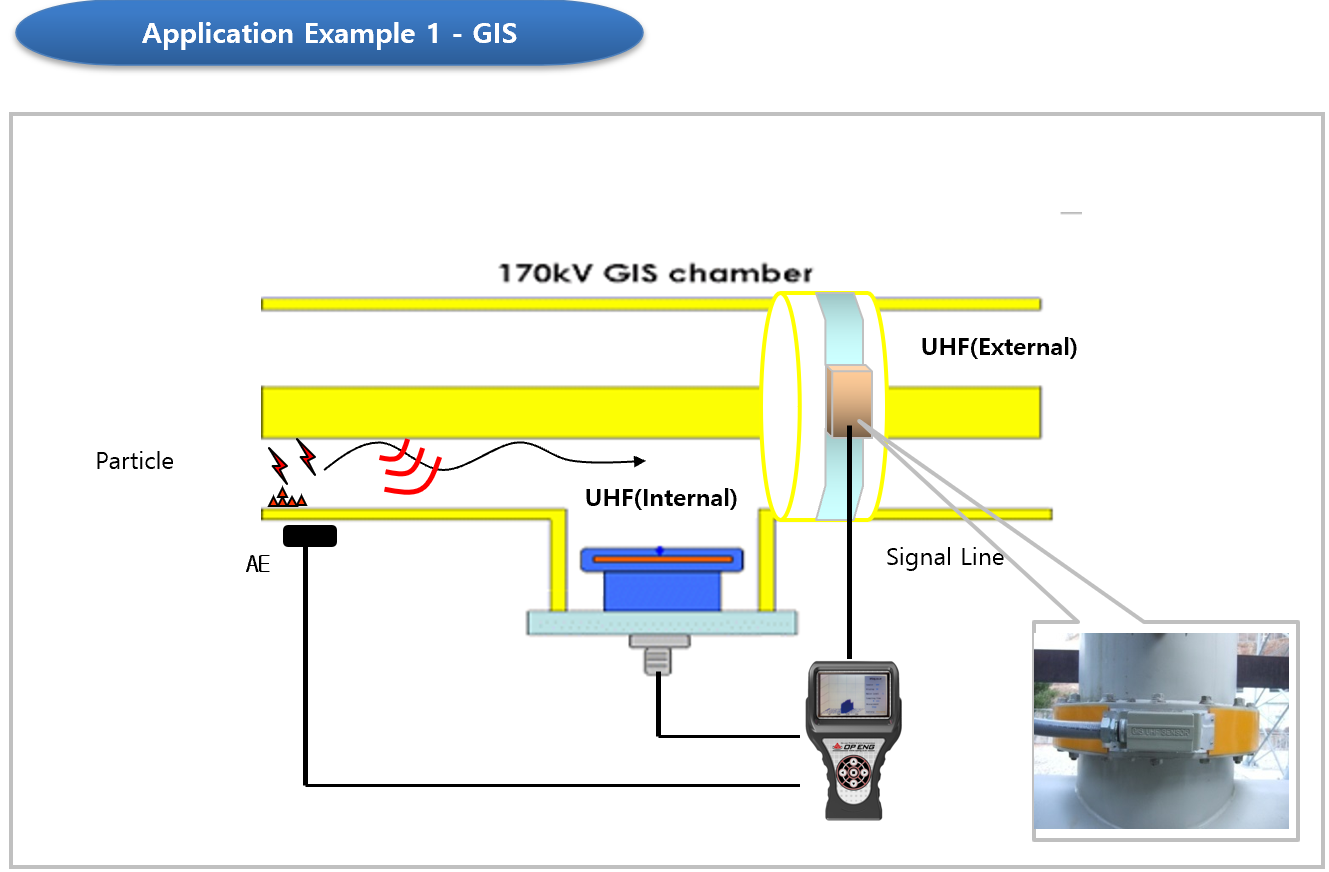 Gas-Insulated Switchgear
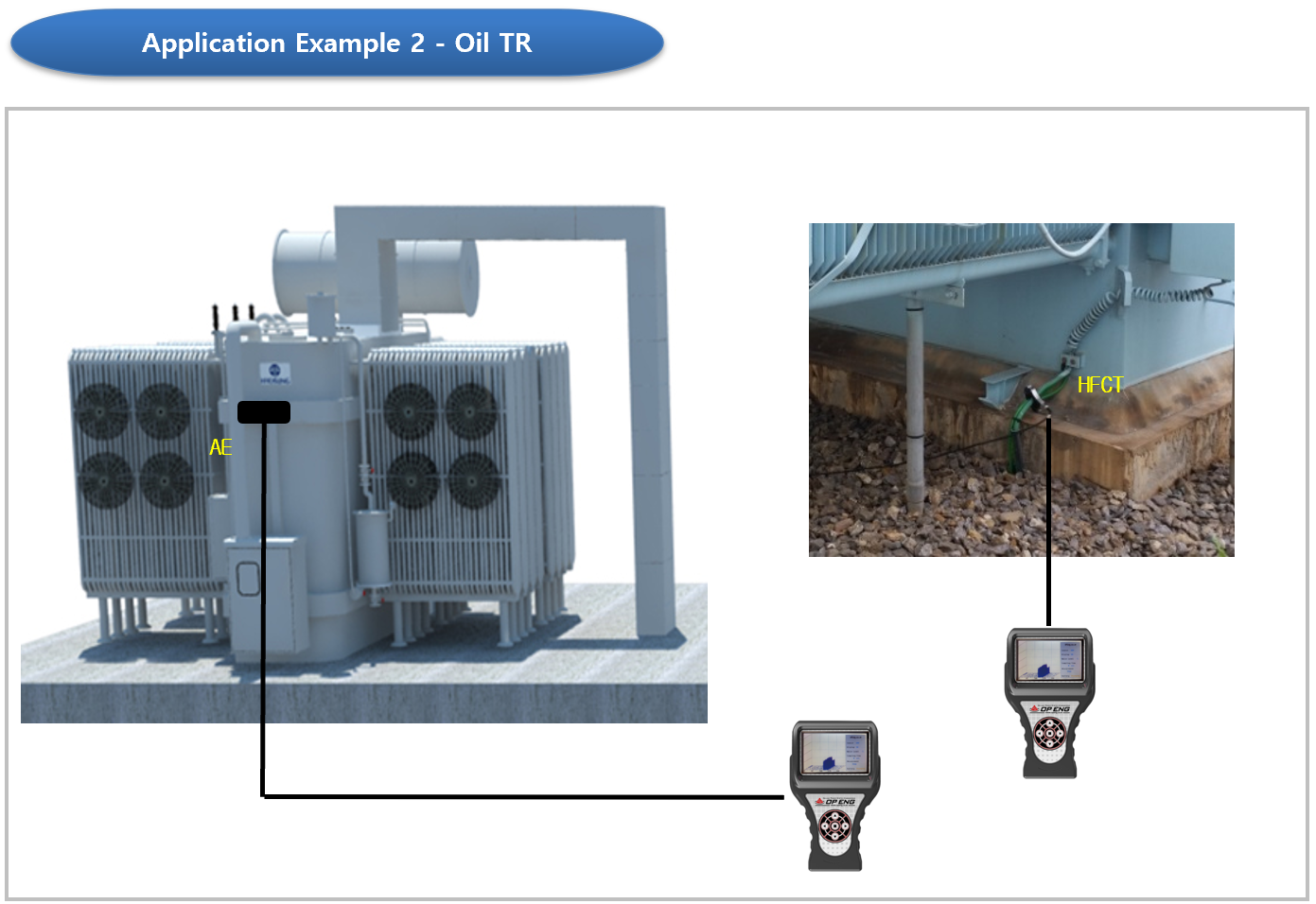 Oil Transformer
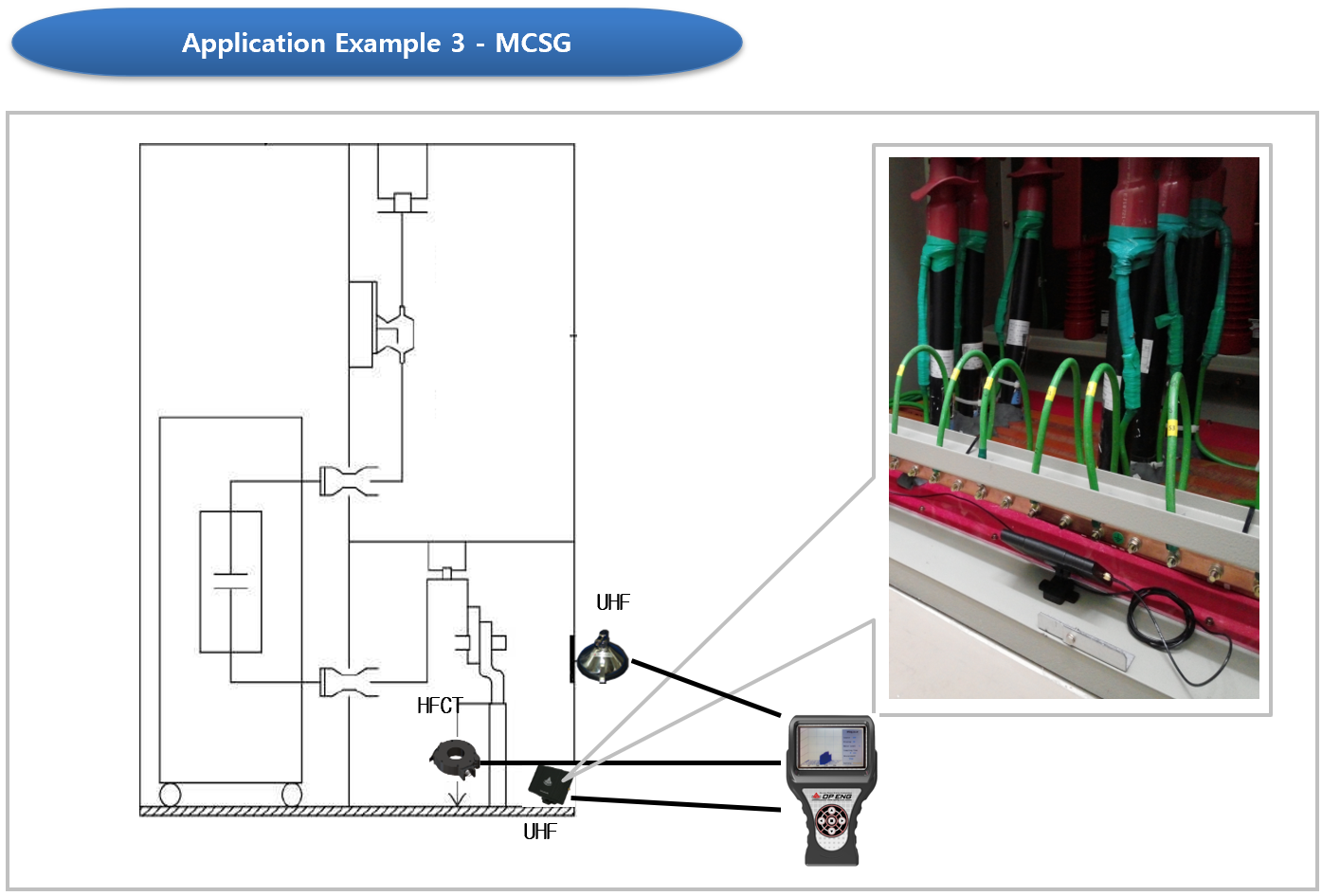 Metal-Clad Switchgear
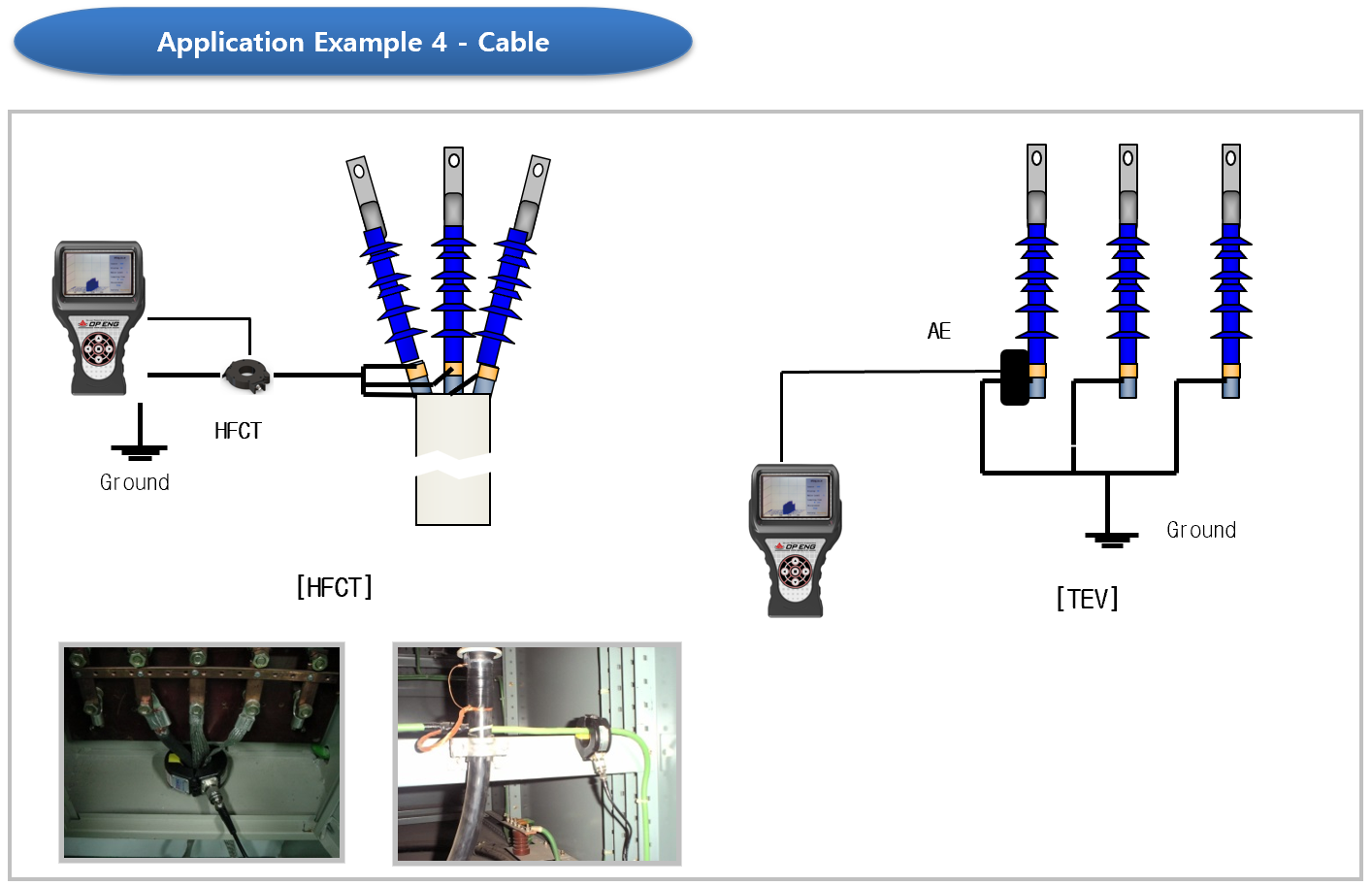 Cable Termination
4. Power-Quality Analysis
Power-quality analysis evaluates voltage, current, frequency and related electrical parameters to identify disturbances that may affect equipment reliability or operating performance. The assessment can support investigations into voltage variation, harmonic distortion, imbalance, transient events, power factor and other supply or load-side abnormalities.
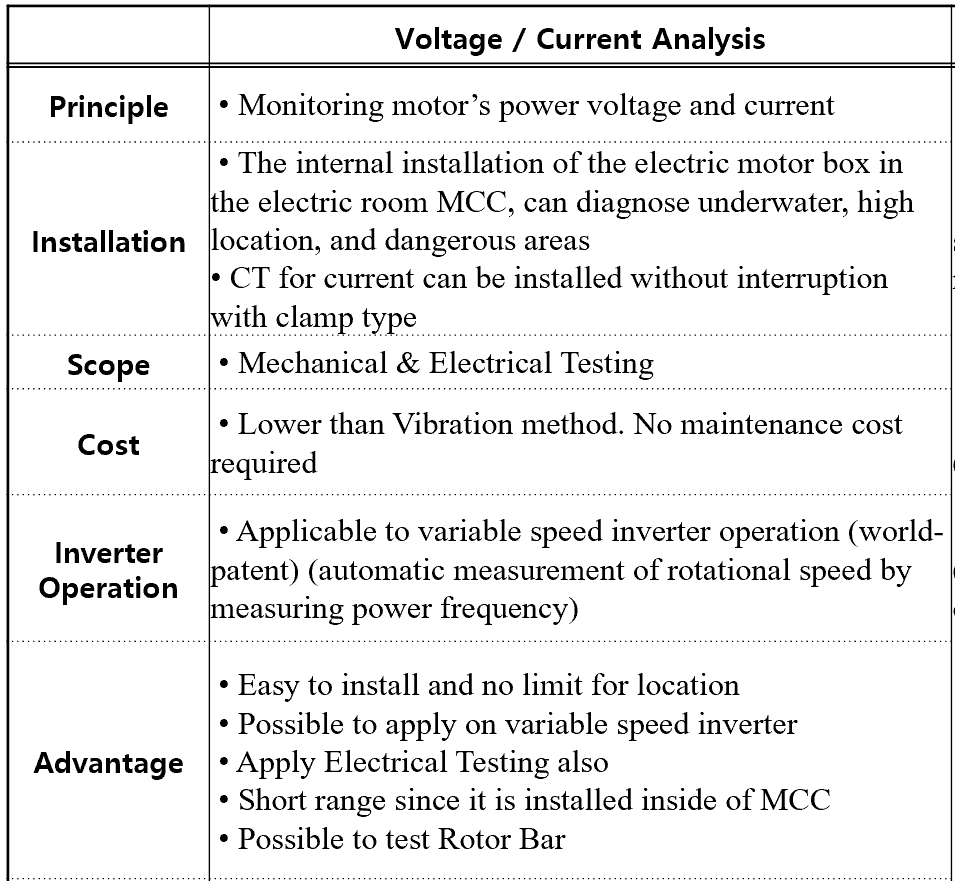
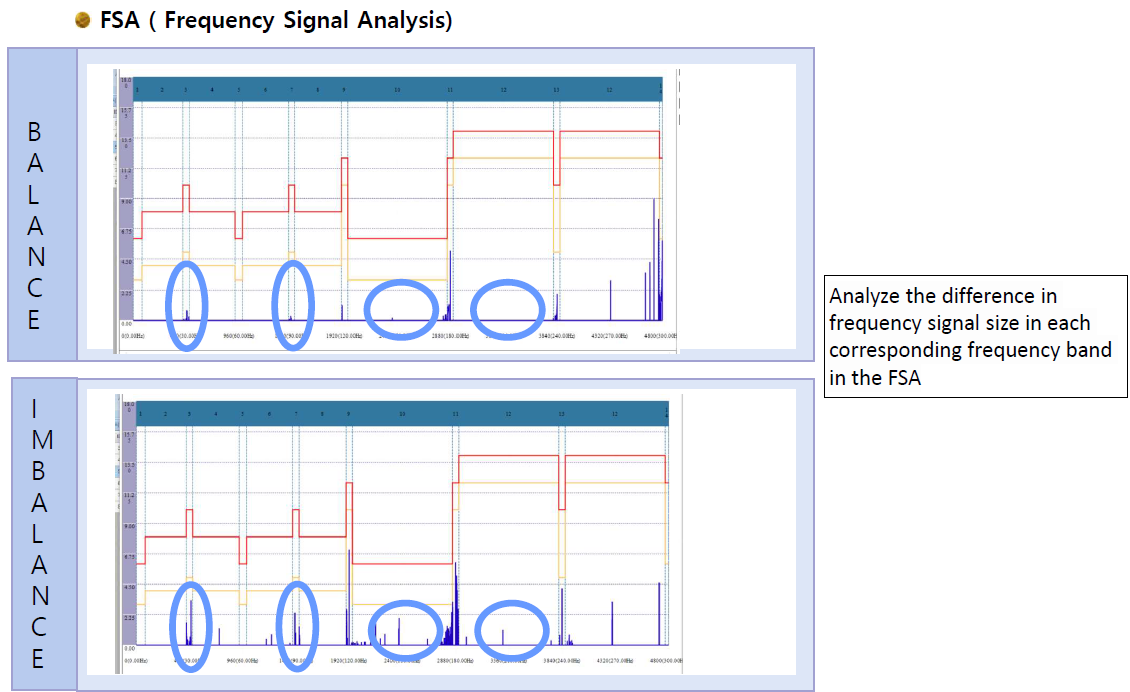
Select either image to view the full-size details.
AI-Assisted Vibration Diagnostics
Greenson's vibration diagnostic service combines vibration measurements, automated pattern recognition and engineering review to assess the condition of rotating machinery. Frequency spectra, overall vibration levels and operating information are interpreted together to identify likely fault patterns and guide maintenance action.
Typical Faults Detected
Imbalance, misalignment, mechanical looseness, bearing damage, resonance, cavitation and abnormal gear conditions.
Suitable Equipment
Pumps, motors, blowers, fans, compressors, gearboxes and other critical rotating assets.
Service Deliverables
Vibration-severity assessment, probable fault diagnosis, supporting spectrum interpretation and recommended follow-up action.
How the Assessment Supports Maintenance
- Provides a condition baseline for critical rotating machinery
- Supports early investigation before a fault develops into functional failure
- Helps maintenance teams prioritise inspection, repair and alignment activities
- Can be used for one-time troubleshooting or incorporated into a wider condition-monitoring programme
Important: Automated diagnostics support the assessment process. Final interpretation should consider the machine design, operating condition, maintenance history and engineering review.
Discuss Your Testing Requirements with Our Engineers
Arrange an on-site assessment, portable water-quality test, pump-performance study or temporary data-logging campaign tailored to your operating assets and project objectives.
Contact Greenson